Much of my reading life for the last eight years has been focused on non-fiction books, largely in my professional field of education, and also in philosophy. But recently I have been “rediscovering” the art of reading fiction, particularly in the evenings once the house settles down. It’s a very different experience, isn’t it, luxuriating into art and storytelling at the end of a day rather than wandering through some obscure philosophical forest, pushing through the overgrown pathways of prose. I suppose, after reading John Dewey for so many years, for instance, that I owe it to myself to read more work in which style is a going concern.
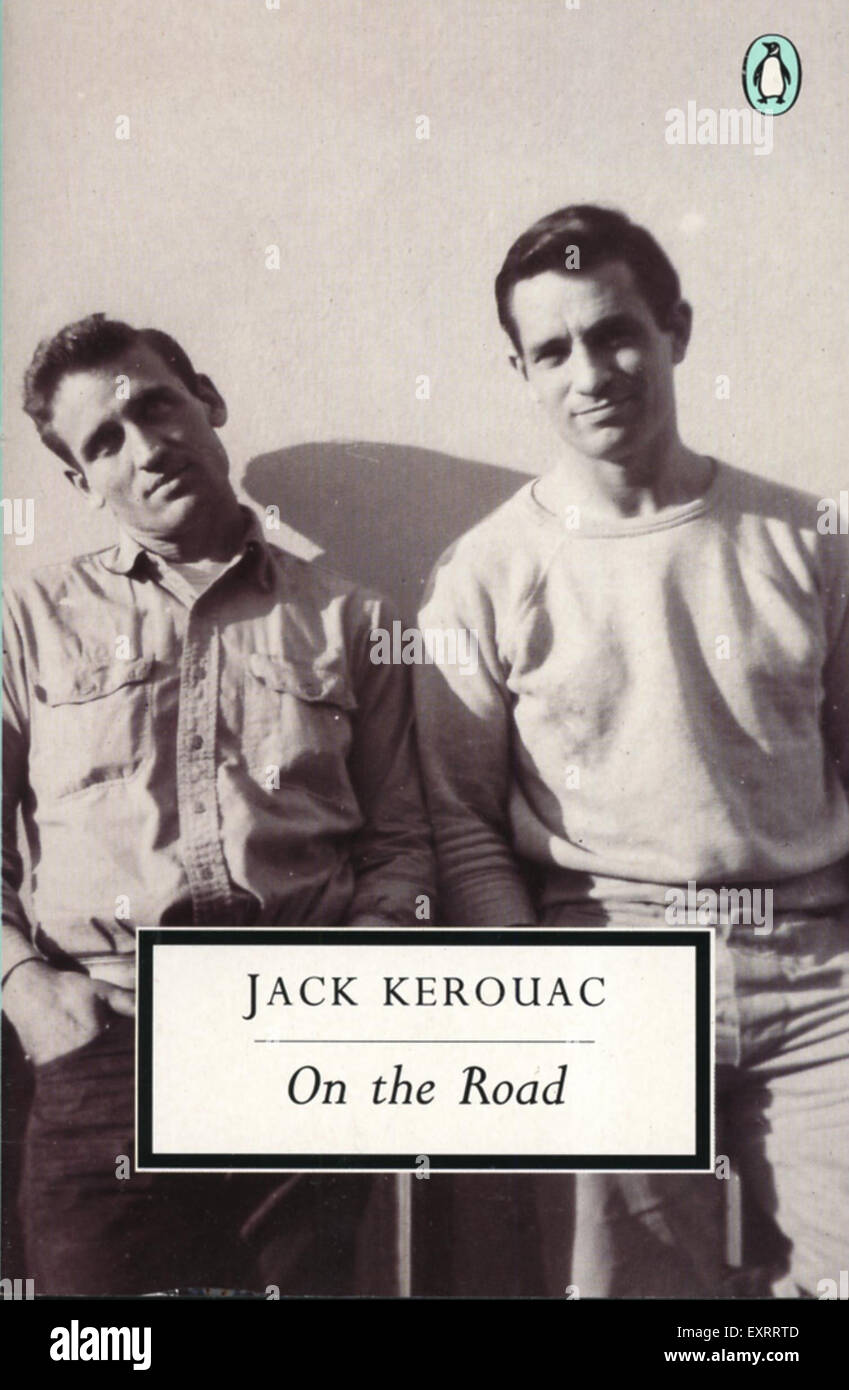
And it was with this in mind that I took the opportunity recently to reread another book I hadn’t read since college: Jack Kerouac’s 1950s classic, On the Road.
Children, I suppose, have a way of carbon dating your life. No longer are you just moving through your days in some vast middle terrain between nursery and nursing home. Now there are distinct phases: the newborn years, the little kid years, the elementary years, and so on. Every parent by necessity becomes a developmentalist. Here is a phase they are coming into, there is one they are just leaving. I find now that I am very conscious of my own stage of life. I am very conscious of being a middle-aged father of young children. Young couples in their early 30s with no children remind me of my wife and me ten years ago – that stage of life. Friends whose children have gone off to college look at me – fondly – with the same understanding.
Not long ago, it occurred to me how young people in their mid-20s seem to me nowadays. That is not because they are any “younger,” of course, but because I have gotten older. The older I get, the closer someone at 25 seems to me to one of the students I teach in late high school. And the older I get, the closer my own high school students seem on the developmental trajectory to my own young children. They’re all not much different, are they?
“He was just a kid, really,” an older coworker, a career educator, said to me once about Kurt Cobain, his boyhood hero. It was only after some years of teaching, and advancing into his mid-thirties, that he began to understand Cobain, this icon of our generation, his and mine, not as demi-god, but as a young man who died when he was still very much a “kid.” There is a real distance that comes from getting older and from having this constant interfacing with young people who are so obviously in the midst of the developmental process. When you’re 24, you still can look back at middle or high school or college as romantic times, periods of discovery and wonder. You may be still turning them over, or reacting to them, or in some sense, living in them still. But when you are 44 like I am and your job is to work with children of these ages, you begin to see them more objectively. Those hallways of your high school, where so many dramatic moments occurred, have forgotten who you are. They have become the stage on which a thousand other children’s dramas were played out – all in very predictable ways. Yes, there is magic in the dreams of young people, in their confusion, in their excitement, in the developmental process itself. But the reality is that there is also a kind of regularity to it. It is a spectrum, a continuum, and generally it’s all heading toward a place that’s fairly predictable, along a path that’s well-trodden. You weren’t the first to feel that way, to have your heart broken, to discover the magic of longing, to test boundaries, to grow up in public. Each stage has its classic developmental milestones and its classic characteristics. This is, I suppose, the view of the veteran educator, and of the man who has seen his own generation have time to develop.
Your early twenties: Now I understand them better. Having worked with generations of students just younger than this, and even with fellow coworkers who are this age, I have a much clearer view.
And it was with this view that I recently reread Jack Kerouac’s famous novel, On the Road. It was one of the most changed reading experiences I have ever had, compared to what I read it at 18. Now, as I read it, I look back at Kerouac and his characters and see that they really were all just kids. It is a testament to what it’s like to be in your early twenties, and a reminder that I no longer am.
I remember reading On the Road for the first time in high school. I remember being inspired by the vision of freedom it offered – of excitement, of adventure, of the open road. It was carpe diem. I am sure many other young people read the book this way when they were young. I read it again in college, and I had the same reaction, but I remember something my professor said: The older she got, the darker the book seemed to her.
As I began to read, I began to have a similar reaction – though not quite that simple.
My initial reaction, as I started to read, was very unsympathetic. This was not the inspiring manifesto of freedom and liberation that I remembered. This was not anything like the so-called “dirtbag” lifestyle that I idealized in my own early and middle twenties, and which I had surely seen reflected in the book as a younger man. To be a “dirtbag” described a life spent pursuing outdoor adventure (kayaking, rock climbing, skiing, for instance) at the expense of living a more conventional mainstream lifestyle. This term surely has its origins long ago, probably dating back to the early climbing culture in Yosemite, or early surfing culture – sort of a parallel chronological movement to the Beats, and not all that dissimilar in substance: the pursuit of adventure, the countercultural (if not criminal) element of it, the eschewing of conventional material success. Sometimes it is high-minded and self-idealizing, sometimes not. Sometimes there are some vague political beliefs attached, but not always.
But what struck me about On the Road is there was very little of any of this. The Beat Movement, as portrayed in On the Road, read to me – at age 44 – as little more than the pursuit of the next thrill, the next high, the next – as Dean and Sal both put it – “kicks”: not sex, drugs, and rock and roll, perhaps – the latter two came later – but at least sex, booze, and jazz. And movement, too – sheer movement. Sometimes there wasn’t much more to it than that, at least not that Sal Paradise, the narrator and Kerouac stand-in tells us. In fact, both Sal, and Dean Moriarty, the Neal Cassidy character, seemed to me deeply unreflective and relatively “flat” in their character development throughout the book.
Yes, there are some beautiful, inspired passages – some of the best I have ever read, for instance, about the joy of music; they are easily some of the best in-the-moment literary descriptions of listening to musicians in person that I have ever read. The writing itself is dazzling through the whole book: descriptive, illuminating, daring, as virtuosic as any of the best Beat-era saxophone playing that you could hear. But for much of the book, the writing is purely descriptive, even superficial. It doesn’t go anywhere. For instance, take one of the wonderful lines Kerouac rips off in the moment during a jazz performance: “The behatted tenorman was blowing at the peak of a wonderfully satisfactory free idea” (197). The writing itself here is doing the same thing. It’s brilliant, but it doesn’t go anywhere much beyond this: “ . . . The tenorman had it and everybody knew he had it,” and at the end of the song, “ . . . everybody pushed around and yelled, ‘Yes! Yes! He blowed that one!’” (198). They – Sal, Dean and friends – are swept up in the sheer exuberance, but that’s about it. The writing itself sometimes intimates more, such as right after, when the same musician plays a slower and sadder song: “ . . . his mouth quivered, he looked at us, Dean and me, with an expression that seemed to say, Hey now, what’s this thing we’re all doing in this sad brown world?” (199). But there’s little comment beyond this from Sal, little deeper reference. Sal’s reflection sort of ends there. At the end of the whole musical set-piece, he writes of the musician, “He looked down and wept. He was the greatest” (199). Right afterward, Sal and Dean invite the musician to go out drinking. He responds, “Yes! Ain’t nothing I like better than good kicks!” (199) and they’re back to basic drinking and carousing.
The whole first half of the book is like this. Dean “could hardly get a word out, he was so excited with life” (127). For Sal, “it’s just kicks. We only live once. We’re having a good time,” as he explains to a somewhat disappointed girlfriend (125). To the extent that he reflects on himself, it is limited to observations such as, “I like too many things and get all confused and hung-up running from one falling star to another till I drop. This is the night, what it does to you.” As he continues – in one of the book’s most famous lines, “I had nothing to offer anybody except my own confusion” (126).
They were kids – that’s what they were: Sal and Dean, and Kerouac and Neal Cassidy, and all of them. That line above probably sounded romantic and countercultural to me when I first read the book in college – a kind of desire to escape responsibility and to live life to its fullest, but now it just sounds like something a very young person would say. There is nothing wrong with that. There’s something charming about it, just as there’s something charming about the ferocious energy both of the book’s entire first half, and about youth itself – this is part of what I enjoy about being a teacher – but as far as insight goes, there’s very little in much of the book, especially in the first half.
Things start to change about two-thirds of the way through the book when Sal visits Dean at his house in San Francisco, where Dean is living with his wife, Camille, and his daughter – they are about to have a second one – and apparently attempting some semblance of a stable domestic life. As soon as Sal shows up, Dean begins reverting to his old ways, and Camille becomes despondent: not only angry, but sad. She takes to sobbing in the bedroom, yelling at Dean, calling him a liar. Sal cannot help but notice this, and it begins to break the trance of his superficiality: “It was horrible to hear Camille sobbing so.” His response is as immature as always: “We couldn’t stand it and went out to buy beer and brought it back to the kitchen” (183). Still, it makes just the slightest impression on Sal that he thinks about it for longer than he has thought about much else in the book: “Camile finally went to sleep or spent the night staring blankly at the dark. I had no idea what was really wrong, except perhaps Dean had driven her mad after all” (183).
Shortly after, Dean reveals he hit Marylou, his other girlfriend. In the process, he ended up injuring himself badly, wearing a large bandage on his hand that becomes a symbol – in my view – for what a trainwreck Dean’s life has become. He is beating women, drinking constantly, his life in disarray.
At this point, the book gets especially interesting because a kind of dramatic irony develops: Kerouac the writer is starting to show you that Dean is really kind of a deadbeat. This is also interesting because it is unclear to what extent Sal, Kerouac’s narrator / authorial stand-in, realizes this. Sal begins to occupy an interesting middle ground: even as he begins to witness more scenes like the one above, scenes which clearly reveal that Dean is acting like little more than a child who refuses to grow up (and sometimes like a straight-up criminal), Sal sticks by him and defends him – even as you can tell that he realizes what Dean is.
For example, Sal does not view Dean’s bandaged thumb as evidence of Dean’s life being out of control. Instead he offers a sort of young man’s faux-philosophical reflection, the kind that he frequently makes in the book, rationalizing and even romanticizing Dean’s behavior: “That thumb became the symbol of Dean’s final development. He no longer cared about anything (as before) but now he also cared about everything in principle; that is to say, it was all the same to him and he belonged to the world and there was nothing he could do about it”( 188). Is this just a fancy, possibly clueless way of saying that Dean doesn’t really care about anyone else? What does Sal truly think?
To Sal’s credit, after Dean tries to change the subject (“Now let’s talk about windows”), Sal confronts him: “Why did Camille throw you out? What are you going to do?” (189), and then – in what I read as a fumbling attempt to help out his clearly destitute drinking buddy, offers to take him abroad to Italy. Dean realizes what Sal is doing, and so does Sal himself, although he expresses it again in his somewhat evasive, abstract way: “I’d never committed myself before with regard to his burdensome existence” (189). Dean is uneasy, causing Sal to blush, and then to reflect, “It was probably the pivotal point of our friendship when he realized I had actually spent some hours thinking about him and his troubles . . . In me it was suddenly concern for a man who was years younger than I” (189). It is as though Sal, like other somewhat unequipped young men thrown into this situation in literature (I think of, for instance, Norman MacLean trying to help his alcoholic, indebted younger brother, Paul, in in A River Runs Through It) wants to help a male friend who he is dimly beginning to realize needs it, but does not know how. The best Norman can do is to take Paul fishing, and the best Sal can do at this moment is to take Dean on another crosscountry road trip, away from his family and responsibilities, in search of more “kicks.”
But Kerouac the novelist does not let the matter of Dean’s conduct go. The first time the book really hits hard is right after the scene described above, right after Camille has thrown Dean out of the house to raise their daughter, and soon-to-be-born daughter alone. Before leaving for Italy, Dean has fled with Sal to a party of friends, and the women there, particularly the character of Galatea Dunkel, whose own husband has vanished from her on a similar jag. Galatea confronts Dean in front of the whole company: “Dean, why do you act so foolish? Camille called and said you left her. Don’t you realize you have a daughter?” (193).
Sal tries to defend Dean, but the others “gave me dirty looks” and Sal relents, but Galatea presses on, in a way that was very satisfying: “I think Marylou was very, very wise leaving you, Dean. For years now you haven’t had any sense of responsibility for anyone. You’ve done so many awful things I don’t know what to say to you” (193).
Dean starts in on one of his inscrutable reactions – giggling, dancing – but Galatea does not relent:
“You have absolutely no regard for anyone but yourself and your damned kicks. All you think about is what’s hanging between your legs and how much money or fun you can get out of people and then you just throw them aside” (194).
Galatea even goes after Dean for going “on the road,” which up until now in the book seemed like the unassailable central preoccupation of all of the characters. “ . . . What do you think you’re going to accomplish by that?” she asks Dean.
This is bracing honesty, much appreciated by me at this point in the book. Dean responds again with his strange, off-killer, frenetic, slightly mystical energy – “as though tremendous revelations were pouring into him all the time now” (195). Sal, as much as Dean, doesn’t listen one bit to what Galatea is trying to tell them. Sal is still enamoured of Dean: “He [Dean’ was BEAT–theoot, the soul of Beatific. What was he knowing?” Sal – and to some extent the others in the room – are still strangely mesmerized by Dean – Sal is “drinking him in, as they once tried to do” (195). Sal has heard just as little as Dean has: “‘We’re going to Italy,’ I said. I washed my hands of the whole matter” (195).
Again, Sal is strangely mesmerized by Dean, in a way that I, as a reader, simply did not understand, and expresses this to the group: “I’ll bet you want to know what he does next and that’s because he’s got the secret that we’re all bursting to find” (195).
There’s some reprieve for Sal and Dean just after this – as they head out to a jazz club, but partway into their trip east, there’s another moment of perspective. Dean and Sal meet up with Dean’s cousin, Sam Brady, a man that young Dean looked up to. Kerouac’s writing, again, cuts right to the point, in contrast to so, so much of the rest of the book:
“Then Sam arrived . . . Dean stood in awe before him. ‘No,’ said Sam Brady, ‘I don’t drink anymore’” (216). His honesty and attitude toward Dean is much like Galatea’s:
“Now look, Dean, I don’t believe you any more or anything you’re going to try to tell me . . . Your father is no longer mentioned among us and we want absolutely nothing to do with him, and, I’m sorry to say, with you either, any more” (216).
Eventually the pair make it to Sal’s aunt’s house. By now, Dean has four children by three different women, and is not living with any of them. Sal’s aunt, in another interlude of clarity, gives Dean some pointed, motherly advice:
“I hope you’ll be able to take care of your new baby that’s coming and stay married this time . . . You can’t go all over the country having babies like that. Those poor little things’ll grow up helpless. You’ve got to offer them a chance to live” (253).
Right afterward, even Sal has a moment with Dean that feels like it represents some future-looking perspective. He tells him, “All I hope, Dean, is someday we’ll be able to live on the same street with our families and get to be a couple of oldtimers together” (254).
But it’s not to be. Later Sal and Dean reunite and go on a bender into Mexico, where Dean leaves Sal when Sal becomes sick with dysentery (“When I got better, I realized what a rat he was”), and eventually Sal sees him one final time, before watching him walk off into the New York City evening, ending the book with a long, beautifully written, elegiac line that ends with the famous phrase: “I think of Dean Moriarty.” It’s a haunting line, but for me not the most haunting line. That honor goes once again to Galatea Dunkel:
“Someday Dean’s going to go on one of these trips and never come back” (205).
Shortly after I reread this book, I went back and reread The Electric Kool-Aid Acid Test. And there is “Dean Moriarity” – that is, Neal Cassidy – again, picked up with an entirely new gang – the proto-hippies, Ken Kesey’s Merry Pranksters, and there is a post-script at the end of the book saying that Neal Cassidy died on exactly “one of those trips” in Mexico.
So overall three things stood out to me about On the Road. First the writing, which was beautiful, inventive, bracing, energetic but deep and soulful. Particularly memorable is Sal’s initial description of Dean, which is surely one of the most inspired descriptions of a person that has ever been put to page: “And in his excited way of speaking I heard again the voices of old companions and brothers under the bridge, among the motorcycles, along the wash-lined neighborhood and drowsy doorsteps of afternoon where boys played guitars while their older brothers worked in the mills . . . It was a wild yea-saying overburst of American joy; it was Western, the west wind, an ode from the Plains, something new, long prophesied, long a-coming . . . A western kinsman of the sun, Dean” (10).
And second, I’ll remember just this – Sal’s incredible romanticization of Dean, the sheer exuberance of their lives together, the sense of carpe diem that pervades the book – especially the first two thirds:
“Although my aunt warned me that he would get me in trouble, I could hear a new call and see a new horizon, and believe it at my young age . . . I was a young writer and I wanted to take off. Somewhere along the line I knew there’d be girls, visions, everything; somewhere along the line the pearl would be handed to me ” (10).
Sal is almost looking to Dean for the pearl – the pearl of wisdom, perhaps, and over and over again, as noted above, Sal seems to believe that Dean is some sort of intuitive higher being, one who is having revelations flowing through him, who seems to possess some sort of inner secret that Sal desperately wants to know.
And that leads to the third element – the one I will remember most strongly: Kerouac’s wonderful and very much unexpected perspective-taking on Dean as the book moves into its last third. Kerouac is not Sal Paradise; Kerouac the writer really is unsparing in giving us a more complete picture of Dean, using the viewpoints of secondary characters to really throw some cold water on Sal’s infatuation.
Ultimately though, I found the narrative arc disappointing. Despite the beautiful writing and wonderful distance we get on Dean, the main character is still Sal Paradise, and neither he nor Dean really seem to experience much in the way of character development. You could say that Sal comes closest in his touching line about wishing to live on the same street someday as Dean – in his embrace of something approaching basic middle class values of home ownership and family rearing – but it’s a momentary glimpse and not much more. It’s hard not to get to the end of the book believing that Sal has learned very little at all.
And that’s another aspect of the book that I found unfulfilling: There’s just not always a whole lot of depth to the characters, particularly to Sal. A lot of what we read about him, from his perspective, is pretty flat, I thought. Again, there’s a lot of sensory intake, a lot of description about the way that life – especially with Dean – is completely overloading his senses, and it’s almost as though he can’t stand it. But there are often whole chunks of text that roll by with almost no reflection of substance on any of those from Sal.
Even that final elegiac line can be hard not to read as little more than Sal’s longing for another shot at more “kicks” with his old drinking buddy.