Years ago, when we were in high school, a friend of mine read Ayn Rand and started claiming that self-interest was the fundamental motive behind every single human interaction. I remember us having a debate: I would point out an instance of – to me – obvious selflessness (a soldier jumping on a grenade, for instance), and he, newly awakened, would respond by rationalizing this action as the most naked expression of selfishness (the guy jumping on the grenade is doing it for his own posthumous reputation, of course). A few years later, when we took a course on Freud one winter, a few of us began jokingly attributing each and every possible event that anyone around us did to a sexual motivation. (One doesn’t have to stretch one’s brain to imagine the general “level of discourse” involved.)
And yet, adolescent gullibility and dorm-room-philosophizing aside, the reading of any and all motives as either the lowest and most base of all possibilities, or the trimming of all complex human interactions to the attribution of one single, overriding drive is a familiar one, a hallmark of many of the most reductive systems of thought, and one that I have seen frequently cropping up in modern thinkers and writers, especially those in the applied-postmodern / Critical Theory movement.
But nowadays, it’s not selfishness exactly, and it’s certainly not sex that everyone sees; it’s power. I have been struck by how much of the modern Critical Theory lens sees power – the desire to attain it, the desire to retain it, and the desire to oppress others – as the main lens through which to understand society. This is particularly striking when paired against much of the movement’s focus on the social constructionism of all other ideals. Yet power — and the related oppression and domination — truly exist. Discourses, institutions, narratives all “function” either to protect or to preserve power; the noble are the ones who “deconstruct” these discourses, point out how they “function” (which is never as a way to attain gradual improvement of everyone, but to preserve power), and point the way toward “deconstructing” all of this, with an eye toward rebuilding it, sometimes in a quasi-utopian world beyond power struggles, sometimes presumably with one’s own tribe now in control.
But where does this focus on power as the underlying motive come from?
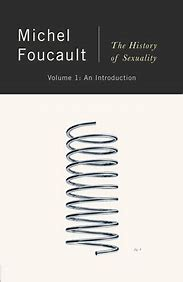
For years I figured that Marx was the key theorist, and I still think that’s probably true, but I’ve been reading more and more about the tremendous influence of French philosopher Michel Foucault on contemporary Critical thought, and unpleasant college memories of reading him aside, I figured it was time to return to the God of Postmodern Deconstruction, the High Priest of Power.
Continue reading “Foucault’s Notion of Power”